


The 7 content strategies most likely to improve AI search brand mentions
To improve brand mentions in AI search results, create content that makes your brand easy to identify, verify, compare, and cite across owned pages and credible third-party sources. AI systems are more likely to include a brand when they can understand what it does, match it to buyer prompts, and corroborate claims with sources.
AI search brand mentions are references to your company, product, service, or category positioning inside generated answers from systems such as AI Overviews, ChatGPT search, Perplexity, Gemini, and Copilot. They may appear as direct recommendations, cited sources, comparison entries, or short explanatory references.
The core job is simple: make your brand answer-ready, source-backed, and measurable through AI search visibility.
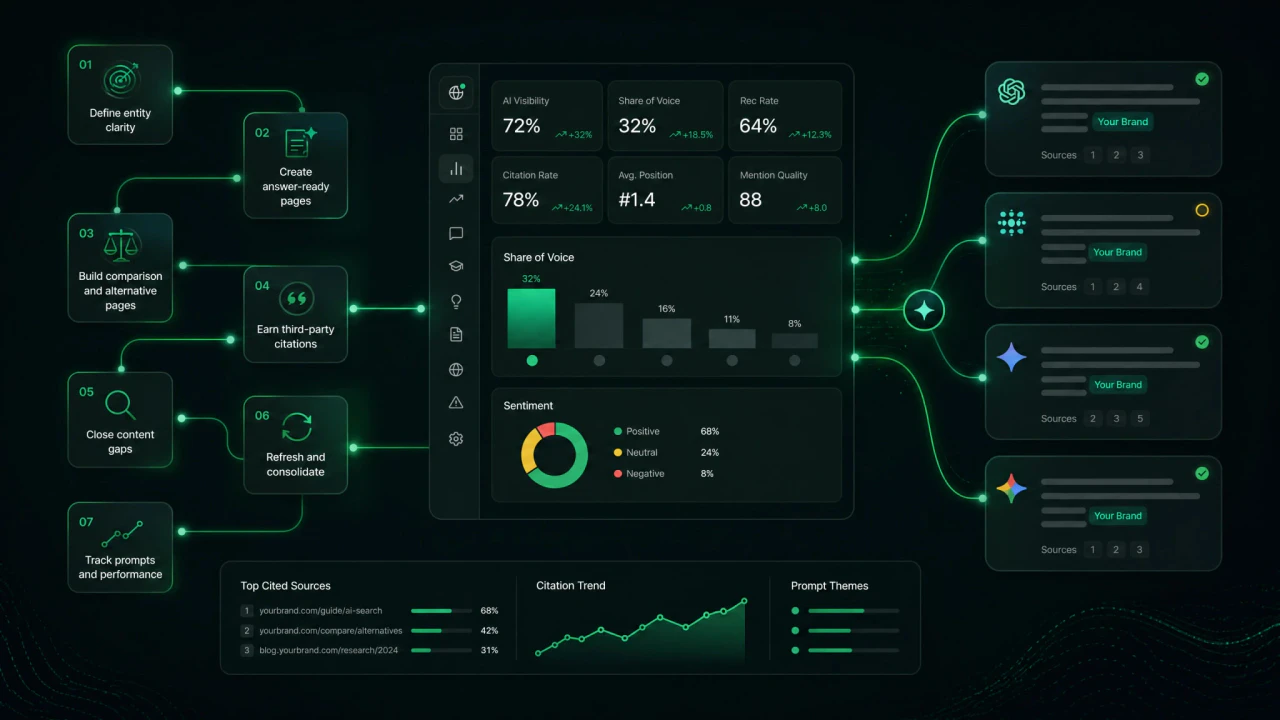
The seven most useful content strategies are:
- Make your brand entity unmistakable.
- Build answer-ready pages for high-intent prompts.
- Publish comparison and alternatives content AI can cite.
- Strengthen third-party citations, not just owned content.
- Fill the content gaps where competitors already appear.
- Refresh claims, data, and product positioning on a schedule.
- Track prompts, citations, sentiment, and share of voice after publishing.
Clear structure and semantic topic focus make pages easier for answer systems to parse, summarize, and cite. The aim is not to trick AI systems into mentioning your brand. The aim is to become the most verifiable, useful answer for the prompts your buyers already ask.
Why AI systems mention brands that are easy to verify
AI systems mention brands when the answer can be grounded in sources they can retrieve, understand, and cross-check. As of 2026, AI Overviews, ChatGPT search, Perplexity, Gemini, and Copilot differ in how they search, synthesize, and cite, but the practical pattern is consistent: unclear brands are skipped, while well-defined entities with corroborating sources are easier to include.
According to Google's guidance on AI features and your website, publishers can use existing Google Search controls to manage how content appears in AI features, which reinforces the value of crawlable, indexable, well-structured pages. Improving E-E-A-T markers, site structure, and crawlability are key strategies for optimizing content for AI search engines.
AI answers also depend on context beyond your site. If analyst pages, review profiles, partner listings, product documentation, and community discussions describe your company in similar terms, systems get repeated evidence. If those sources conflict, the model has to guess. Guessing usually means omission.
1. Make your brand entity unmistakable
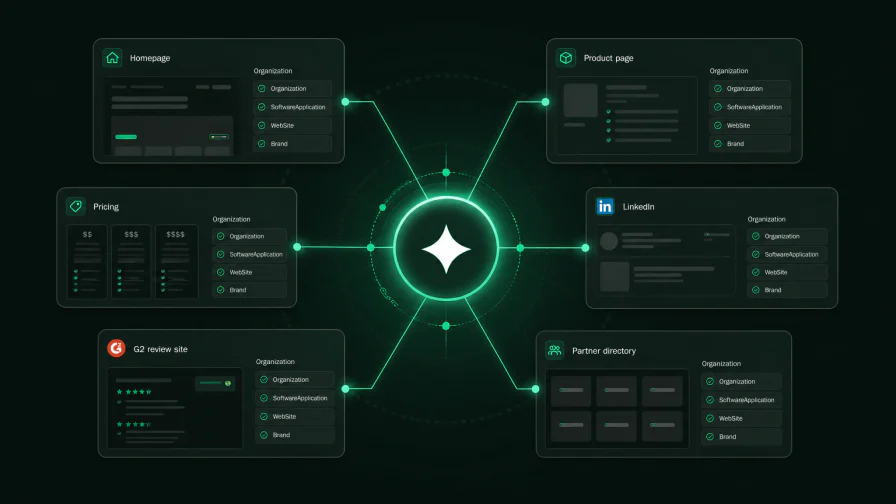
A brand entity is the machine-readable understanding of who you are, what you sell, who you serve, and which category you belong in. If your homepage says one thing, your product pages say another, and your profiles use different descriptions, AI systems receive weak entity signals.
Consistent messaging is important for improving visibility in AI search results such as ChatGPT. Treat consistency as a ranking asset, not a branding preference.
Build entity clarity through:
- A concise company description on the homepage and about page.
- Consistent category language across product, pricing, and profile pages.
- Organization, Product, SoftwareApplication, and author structured data where relevant.
- Clear author bios for expert content.
- Product pages that state audience, use case, integrations, limitations, and outcomes.
- Matching descriptions across LinkedIn, directories, review sites, and partner pages.
Do not make the system infer your category. State it plainly and repeat it where it matters.
2. Build answer-ready pages for high-intent prompts
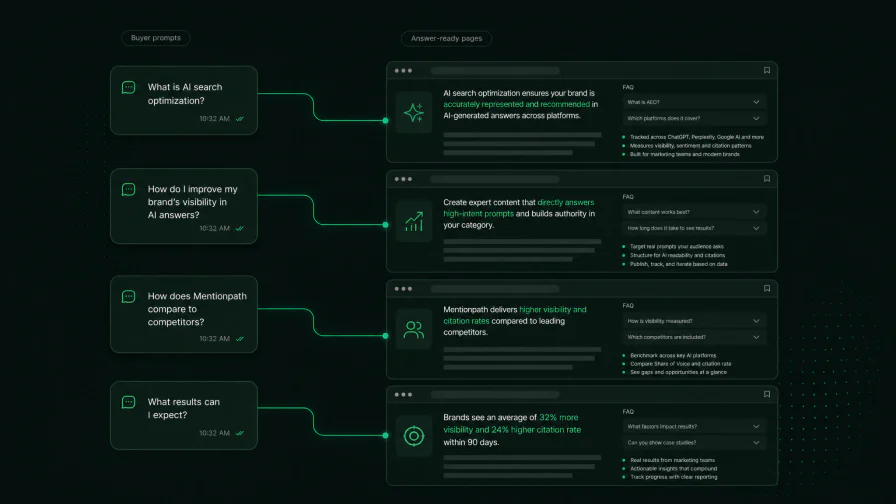
AI search is prompt-led. Buyers ask complete questions, not just keywords, so pages need to answer the exact prompts that influence shortlists, evaluations, and procurement decisions.
Brands must align content and headings with the specific prompts and buyer questions that drive AI citations in their industry. The strongest pages give a direct answer in the first paragraph, then support it with definitions, bullets, examples, FAQs, and evidence. Mentionpath's AI content workflow is built around turning visibility gaps into pages that answer real prompts rather than generic topic ideas.
Useful prompt-led page targets include:
- What is the best software for a specific team, industry, or use case?
- How does this product integrate with an existing stack?
- What should buyers compare before choosing a vendor?
- How much does this type of solution cost?
- Which tool is best for enterprise, agency, startup, or regulated use?
The page should be easy to excerpt. Short definitions, clear subheadings, and source-backed claims improve citation value.
3. Publish comparison and alternatives content AI can cite
Recommendation prompts often ask for the best tool, top vendor, or alternative to a known product. If your site does not explain how your brand compares, AI systems will rely on third-party summaries, competitor pages, or older review snippets.
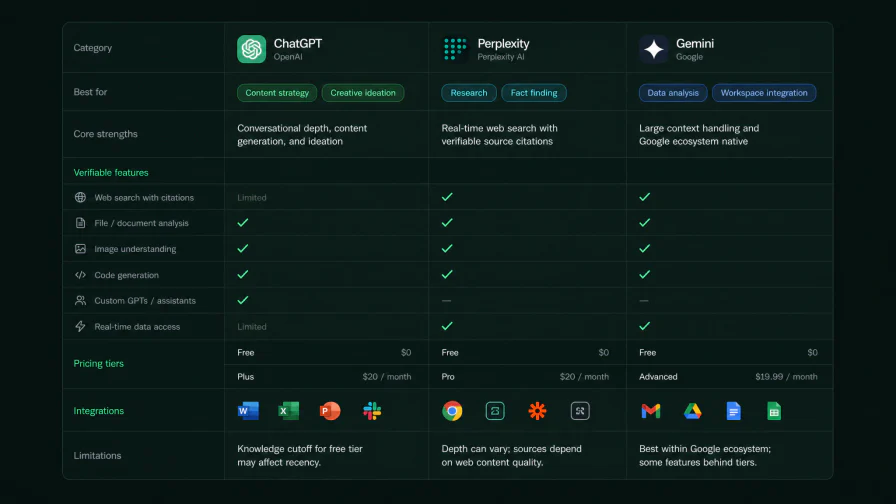
Good comparison content is fair, specific, and useful. It does not claim universal superiority. It explains fit by audience, capability, use case, implementation effort, data needs, and tradeoff. Content that already ranks well in traditional search for target queries is more likely to be found and considered by AI systems.
A comparison page should include:
- A neutral explanation of each option.
- Best-fit customer profiles.
- Feature differences that buyers can verify.
- Pricing and packaging considerations where public.
- Integration, support, and reporting differences.
- Clear limitations, not only strengths.
- Updated publication and review dates.
The useful framing is best for, not better than. AI systems need a reason to recommend a brand in context.
4. Strengthen third-party citations, not just owned content
Owned content explains your positioning. Third-party sources corroborate it. AI answers often cite or reference external sources because they reduce reliance on a brand's own claims, especially for recommendation, trust, and category prompts.
Track the sources that mention your brand, cite your pages, or appear beside competitors through mentions and sources. Corroboration matters more than raw mention count. A dozen thin directory listings are weaker than a few credible sources that accurately describe what you do and why buyers choose you.
High-value citation sources include:
- Analyst pages and category reports.
- Partner directories and integration marketplaces.
- Review sites with detailed customer language.
- Podcast interviews with founders, operators, or customers.
- Digital PR in credible industry publications.
- Guest articles that explain category problems with expertise.
- Community discussions where real practitioners compare options.
The priority is consistency across independent sources. If the same core positioning appears in credible places, AI systems have stronger support for including the brand.
5. Fill the content gaps where competitors already appear
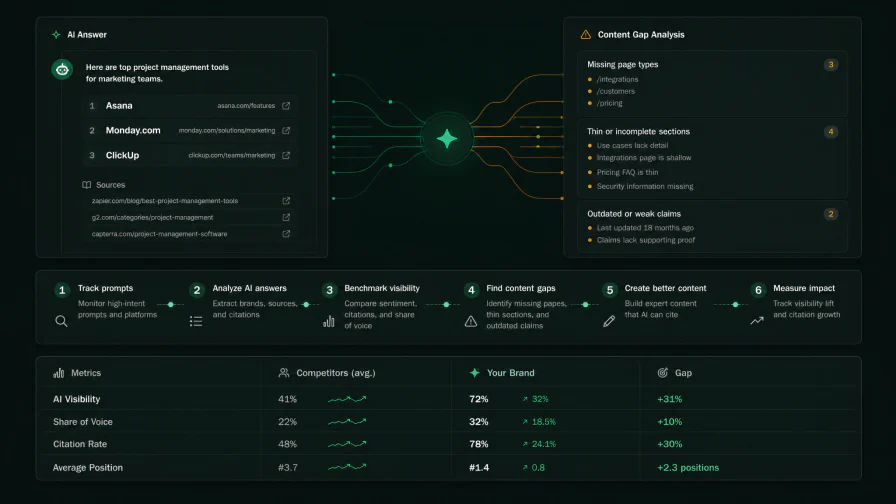
The fastest way to find useful content opportunities is to inspect prompts where competitors are mentioned and your brand is absent. Those gaps reveal missing pages, weak explanations, unclear positioning, or absent citation support.
Brands should benchmark competitor citation sources to identify where they can strengthen their own content and earn mentions. A practical AEO and GEO gap workflow looks like this:
- Group buyer prompts by category, use case, persona, and buying stage.
- Record which brands appear in AI answers and which sources are cited.
- Compare your content against the cited sources.
- Identify missing page types, thin sections, outdated claims, and unclear differentiators.
- Build or refresh the pages most likely to close the gap.
- Recheck the same prompts after publishing.
Do not only copy competitor topics. Find the reason they are cited, then create a clearer, more current answer.
6. Refresh claims, data, and product positioning on a schedule
Outdated content loses value quickly in AI search because answers need current facts, product details, and examples. A page that was accurate six months ago may now describe old packaging, retired features, missing integrations, or market assumptions that no longer match buyer expectations.
Refreshing underperforming pages based on URLs cited in AI answers helps brands double down on effective content. Review key pages at least quarterly, especially comparison, pricing, integration, and category pages.
Refresh checks should include:
- Validate every product claim.
- Update screenshots, examples, and workflows.
- Replace stale statistics with current sources.
- Add publication or reviewed dates where useful.
- Improve weak intros so the answer appears immediately.
- Remove vague claims that cannot be verified.
- Add missing FAQs based on new prompt data.
Freshness is not cosmetic. It protects trust, citation accuracy, and buyer confidence.
7. Track prompts, citations, sentiment, and share of voice after publishing
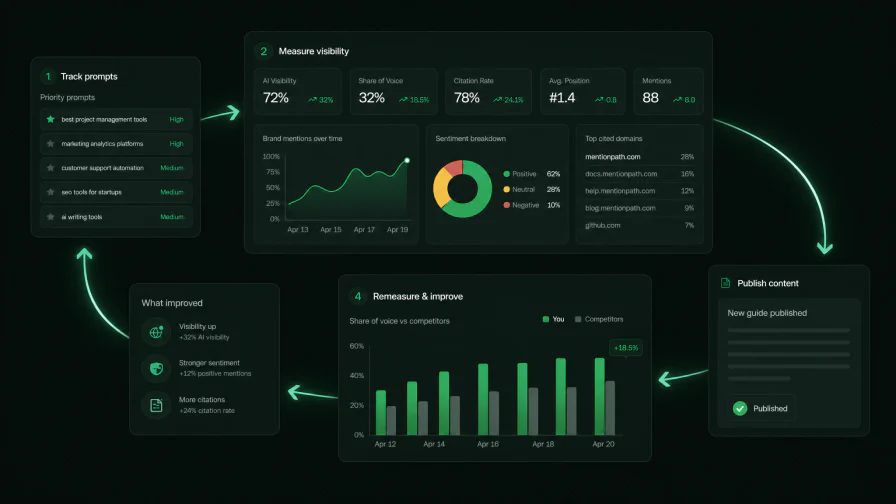
Publishing is only half the work. AI visibility improves when teams measure whether content changes how their brand appears across prompts, sources, and answer formats.
Mentionpath is a SaaS platform that measures and improves how brands appear in AI answers and search. It tracks brand mentions, citation sources, sentiment, positioning, competitor presence, and content gaps so teams can see which pages and sources influence answer visibility. Mentionpath offers tracking and content gap analysis for AEO and GEO to help brands turn visibility gaps into answer-ready content.
Use prompt tracking to monitor:
- Whether your brand appears for priority prompts.
- Which competitors appear beside you.
- Which URLs and domains are cited.
- Whether answer sentiment is positive, neutral, or negative.
- Whether positioning matches your actual differentiation.
- Whether new pages move prompt-level visibility over time.
AEO and GEO work needs a feedback loop. Without measurement, teams confuse publishing activity with actual presence in AI answers.
What to do next if AI search visibility matters to your pipeline
Start by measuring where your brand appears today, where competitors appear instead, and which sources AI systems cite for your most valuable prompts. Prioritize gaps tied to revenue, not vanity topics.
Then ship answer-ready pages, improve entity consistency, strengthen third-party corroboration, and refresh high-value content on a set schedule. Track movement at the prompt level after each publishing cycle.
Better AI mentions come from verifiable positioning, useful content, credible citations, and consistent measurement. A brand becomes mentionable when machines can verify it and buyers can understand why it belongs in the answer.