

The 2026 visibility model: win where people ask, compare, and decide
Brands scale visibility in 2026 by connecting SEO demand, GEO source influence, and AEO answer readiness into one measurement and content system. SEO shows what people search for, GEO improves how generative systems understand and represent the brand, and AEO makes content easy for answer engines to extract, cite, and summarize. Improving brand visibility in AI search engines requires specific measurement, content, and distribution strategies rather than guesswork.
- Start with one baseline across search rankings, AI answers, citations, sentiment, and competitors.
- Track prompts as buyer journeys, not isolated keywords.
- Treat citations as visibility assets because AI systems often answer through sources, not pages.
- Build direct, evidence-backed content that answers high-intent questions fast.
- Prioritize gaps where competitors appear and the brand is absent, misrepresented, or uncited.
- Review movement monthly, then update content, sources, and messaging as one loop.
What SEO, GEO, and AEO mean in practice
Use these working definitions:
- SEO is the practice of improving pages so they rank, earn clicks, and capture known search demand in traditional search results.
- GEO, or Generative Engine Optimization, improves how a brand is represented in generative AI answers, summaries, comparisons, and cited source sets.
- AEO, or Answer Engine Optimization, structures content so answer systems can quickly extract a clear, accurate response.
- Mentionpath is a SaaS platform that measures and improves how brands appear in AI answers and search.
According to Jasper's GEO and AEO guide, GEO and AEO build on foundational SEO rather than replacing it. The practical shift is measurement: teams now need to know not only whether they rank, but whether the brand is mentioned, cited, positioned correctly, and compared fairly.
How the three disciplines divide the work
| Discipline | Primary job | 2026 output |
|---|---|---|
| SEO | Capture demand from search queries | Rankings, impressions, clicks, qualified traffic |
| GEO | Improve representation in generative systems | Better brand mentions, citations, summaries, and comparisons |
| AEO | Make answers easy to parse | Clear definitions, direct answers, structured evidence, source-ready passages |

Why visibility now depends on prompts, citations, and source authority
Ranking alone no longer describes brand visibility because buyers increasingly ask full questions inside AI-led experiences. Google's AI Mode update shows Search moving toward complex, multi-part questions, while OpenAI's ChatGPT Search announcement describes conversational answers connected to web sources. AI Overviews, AI Mode, ChatGPT Search, Perplexity, Gemini, and Copilot all compress research into synthesized responses.
That changes the job of content. A brand can rank well and still be absent from an AI answer if another source explains the category better, has stronger authority, or gives the model a cleaner comparison. Visibility now depends on three signals working together: the prompt that triggers the answer, the sources cited or used, and the way the brand is described relative to alternatives.
MEASURE: build one baseline across search and AI answers
Build the baseline before publishing more content. Start with branded queries, non-branded category terms, comparison searches, pain-point questions, and sales objections. Convert those into buyer prompts across discovery, evaluation, and decision stages.
For each prompt or query, record whether the brand appears, which competitors appear, which sources are cited, what sentiment is implied, and whether the positioning is accurate. Measure the same theme across traditional search and major answer engines. In 2026, success metrics also need to connect AI answer exposure to conversions and leads from AI search, not only impressions.
The metrics that matter most
| Metric | Decision it informs |
|---|---|
| Traditional rankings and impressions | Which demand pools already exist and where SEO still needs work |
| AI answer presence | Which prompts include, ignore, or misstate the brand |
| Citation frequency | Which sources influence answers and deserve updates, outreach, or reinforcement |
| Mention sentiment and positioning | Whether answers describe the brand accurately and favorably |
| Competitor overlap | Where rivals own the narrative or appear in comparison answers |
| Content gaps | Which pages, definitions, use cases, or proof points should be built next |
A good baseline does not chase every prompt. It focuses on prompts with commercial intent, recurring sales relevance, and enough volume or strategic value to affect pipeline.

BUILD: turn insights into answer-ready content
Answer-ready content starts with the answer. Put a concise definition, recommendation, comparison, or explanation near the top of the page, then support it with evidence, examples, and clear next steps. Pages should use consistent entity names, product descriptions, category language, customer segments, and proof points so AI systems can connect the brand to the right concepts.
High-performing content for SEO, GEO, and AEO usually includes:
- Direct answers to common buyer prompts
- Clear definitions of the category, product, audience, and use cases
- Comparison pages that explain tradeoffs without vague claims
- Evidence-backed statements, including data, customer proof, and source references
- Structured sections that are easy to quote or summarize
- Consistent messaging across product pages, blogs, help content, and third-party profiles
eMarketer's GEO and AEO FAQ reports that success in AI search and SEO depends on well-structured content, clear entity identification, and authoritative sourcing.
Prioritize gaps by revenue stage and answer risk
Prioritize content gaps by revenue stage, not editorial convenience. A missing top-of-funnel definition matters, but a misleading comparison answer near purchase can cost more.
Score gaps using four factors:
- Buyer stage: decision-stage prompts usually need faster attention.
- Commercial value: focus on prompts tied to pipeline, demos, trials, or sales calls.
- Competitor advantage: fix topics where competitors are cited and the brand is absent.
- Answer risk: address prompts where AI systems give incomplete, outdated, or unfavorable explanations.
Fix high-intent and high-ambiguity topics first. These are the places where a clear answer can change consideration.

GROW: strengthen the sources AI systems trust
Owned content is the base, not the whole system. Scalable visibility also depends on consistent mentions across reputable third-party sources that AI systems and search engines can interpret as corroboration. Lumar's four-pillar GEO framework shows that a structured GEO strategy can improve AI search visibility by separating technical access, content quality, authority, and measurement.
For B2B software brands, the goal is not more mentions everywhere. The goal is consistent, accurate proof in places buyers and answer systems already trust. Category descriptions, use cases, integrations, pricing language, and differentiators should match across owned and earned sources.
Where third-party proof has the highest impact
Third-party proof usually matters most in sources that compare, validate, or contextualize vendors:
- Review platforms with detailed customer feedback
- Analyst-style guides and category explainers
- Integration directories and partner pages
- Expert roundups and practitioner interviews
- Trusted industry media and newsletters
- Public knowledge bases, documentation, and community resources
Credibility and consistency matter more than volume. A few authoritative sources with accurate positioning often beat dozens of thin mentions.

How Mentionpath supports the operating model
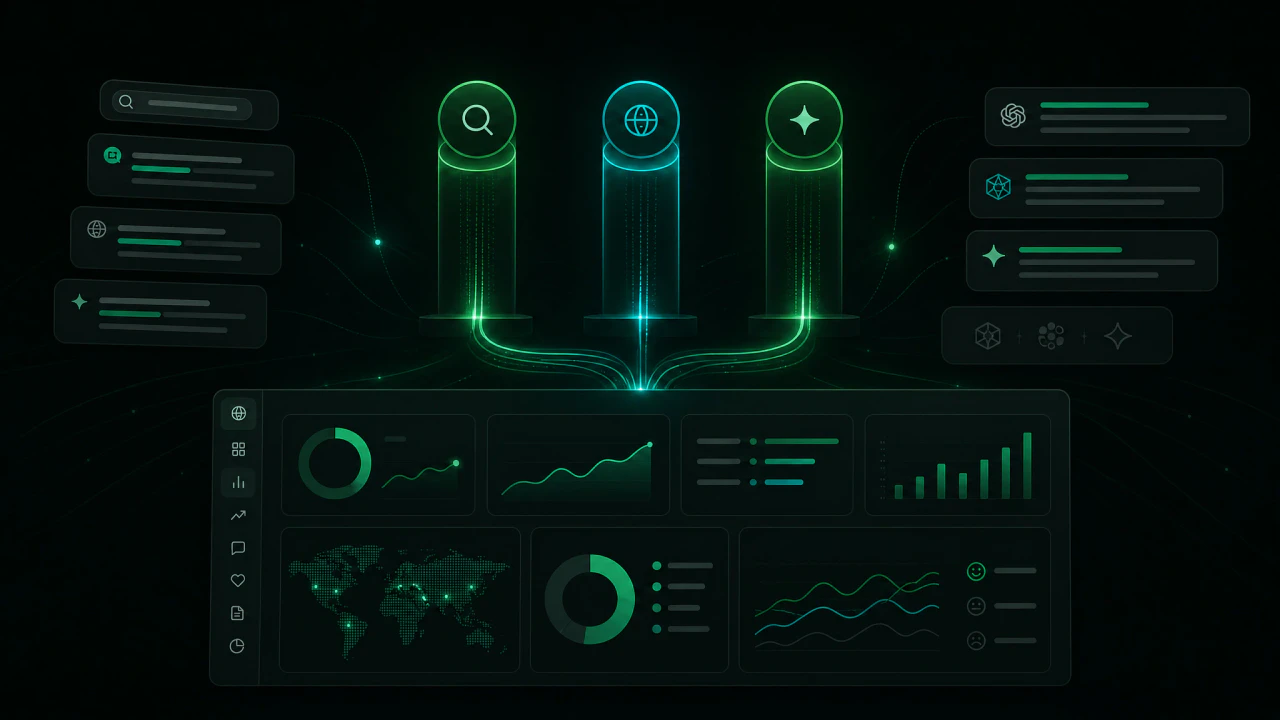
Mentionpath supports this operating model by giving teams a dedicated view of how their brand appears in AI answers and search. Mentionpath provides tools for tracking AI answer visibility, monitoring citations, and benchmarking competitors for AEO and GEO. It also allows brands to track AI visibility, citations, and sentiment across multiple AI models and 150+ countries.
The practical value is focus. Teams can see which prompts mention the brand, which sources influence answers, how sentiment and positioning shift, and where competitors hold an advantage. Mentionpath's AI search visibility workflow then helps turn those findings into content and source priorities without treating SEO, GEO, and AEO as separate reporting silos.
A 30-day plan to start scaling visibility
Use the first month to create movement, not a giant strategy deck.
- Week 1, MEASURE: audit priority rankings, branded prompts, non-branded prompts, comparison prompts, and decision-stage questions. Record answer presence, citations, sentiment, and competitors.
- Week 2, MEASURE: group findings by buyer stage and identify the prompts where absence, weak positioning, or competitor dominance creates the highest risk.
- Week 3, BUILD: update the highest-value pages with direct answers, clearer definitions, better comparison copy, stronger evidence, and consistent entity language.
- Week 4, GROW: map the sources most often cited in answers, refresh owned profiles, target credible third-party mentions, and review early movement.
Repeat the cycle every month. The baseline gets sharper as prompts, sources, and buyer questions change.
The durable advantage: be easy to understand, cite, and trust
Brands that scale visibility in 2026 will make their expertise clear to humans and machine-mediated answer systems at the same time. The durable advantage is a repeatable rhythm: measure where answers form, build content that resolves uncertainty, and grow the sources that confirm the brand's position. Isolated rankings fade. Clear, cited, trusted answers compound.